
The Cogent Bidentate C18™ HPLC Column is a unique TYPE-C™ silica hydride stationary phase designed for use in both reversed-phase (RP) and unique mixed mode HILIC chromatography. This versatility allows chromatographers to analyze a broad range of compounds, from highly hydrophobic analytes to very polar molecules, using the same stationary phase technology.
This guide provides recommended startup procedures, method development strategies, storage instructions, and best practices to help achieve optimal performance and long column life.
Choosing the Appropriate Separation Mode
Reversed-Phase (RP)
Use reversed-phase chromatography for hydrophobic and moderately polar compounds.
Typical applications include:
- Natural products
- Pharmaceuticals
- Cannabinoids
- Hydrophobic impurities
- Environmental contaminants
Examples
- Cannabinol
- Limonin
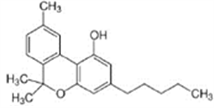
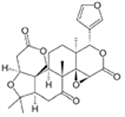
Increasing Retention in RP
To increase retention:
- Increase the water content of the mobile phase.
- Reduce the percentage of organic solvent.
HILIC - Mixed Mode
Use HILIC when compounds are too polar for effective retention in reversed-phase chromatography.
Typical applications include:
- Polar pharmaceuticals
- Organic acids
- Amines
- Metabolites
- Highly water-soluble compounds
Examples
- Metformin
- Methotrexate
Increasing Retention in HILIC
To increase retention:
- Increase the organic content of the mobile phase.
- Reduce the aqueous content.
Before Using the Column
Before installing a new column:
- Completely purge instrument solvent lines of previous mobile phases.
- Purge the injector to remove residual sample contamination.
- Confirm all solvents are fresh, HPLC-grade, and properly degassed.
- Prepare fresh buffers daily.
- Verify all tubing and fittings are clean and properly connected.
Startup Instructions
Initial Equilibration
- Install the column following standard laboratory procedures.
- Equilibrate with a 50:50 organic solvent/water mixture containing all planned mobile-phase additives.
- Continue equilibration for approximately 30 minutes.
- After equilibration, switch to your initial method conditions and allow the system to stabilize.
Recommended Protection
For dirty matrices or challenging samples:
- Use inline filters whenever possible.
- Use guard columns whenever possible.
- Replace protection devices routinely as part of preventive maintenance.
Reversed-Phase Method Development
Neutral Compounds
Recommended starting conditions:
- Water
- Acetonitrile or methanol
- 0.1% formic acid in both solvents
For LCMS applications, adding 0.1% formic acid is strongly recommended.
Simple Samples
Begin with:
- 70-90% organic solvent
Then increase water content as needed to achieve desired retention.
Complex Samples
Recommended starting gradient:
- 90% organic
- To 10% organic
- Over approximately 10 minutes
Adjust gradient range and slope as needed.
Acidic Compounds
To maximize reversed-phase retention:
- Acidify the mobile phase with approximately 0.1% formic acid.
This suppresses ionization and increases hydrophobic retention. Method development can then follow the same approach used for neutral compounds.
Basic Compounds
Many hydrophobic bases can be analyzed successfully by RP chromatography.
However:
- Small highly polar bases may show limited RP retention.
- These compounds often perform better in HILIC.
Avoid operating at unnecessarily high pH values that may shorten column or instrument lifetime.
HILIC - Mixed Mode Method Development
Acidic Compounds
To maximize HILIC retention:
- Ionize the acid.
Recommended starting buffer:
- 10 mM ammonium formate
- or
- 10 mM ammonium acetate
Recommended starting pH:
- approximately 6.5
Simple Samples
Start with:
- 50% aqueous buffer
- 50% acetonitrile
Increase organic content until desired retention is achieved.
Complex Samples
Recommended scouting gradient:
- 90% acetonitrile
- To 20% acetonitrile
- Over approximately 10 minutes
Optimize as needed.
Polar Neutral Compounds
Many polar neutral compounds perform well in HILIC. Use the same method-development strategy recommended for acidic compounds.
Basic Compounds
Recommended starting mobile phases include:
- 0.1% formic acid
- or
- 0.2% acetic acid
Choose isocratic or gradient methods depending on sample complexity.
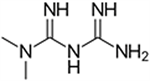
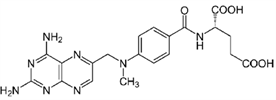
Metformin Methotrexate
Troubleshooting Common Problems
Common causes of poor chromatographic performance include:
- Inadequate equilibration
- Contaminated solvent lines
- Improper sample solvent
- Dirty mobile phases
- Worn fittings
- Buffer precipitation
- Insufficient filtration
Related Resources
- View TYPE-C™ Column Specifications and Troubleshooting Guidelines
- View TYPE-C™ HPLC Column Troubleshooting Tips
Storage Instructions
At the end of use:
- Flush the column with a mobile phase containing approximately 90:10 organic solvent/water.
- Remove all system pressure before disconnecting the column.
- Store under recommended solvent conditions.
Important: Never disconnect a column while pressure remains in the system. Pressure shock can damage column hardware and stationary phase performance.
Related Resources
Best Practices Summary
- Use HPLC-grade solvents only.
- Degas all mobile phases.
- Replace buffers daily.
- Equilibrate thoroughly before analysis.
- Use column filters and guard columns whenever possible.
- Increase water to increase RP retention.
- Increase organic solvent to increase HILIC retention.
- Store columns in approximately 90:10 organic/water solvent.